Problem Space
Survivors of childhood trauma struggle with traditional visualization techniques used in therapy because they require imagination, emotional attunement, and imagery skills. Therapists often rely on guided imagery or symbolic techniques, but many clients experience emotional numbing or limited imaginative capacity.
Difficulty Visualizing
Many clients struggle to form vivid inner imagery during trauma-related work.
Text-Heavy Tools
Most AI mental health systems are conversational, not visual or immersive.
Limited Clinical Controls
Generative video models lack clinical controls for tone, narrative, or personalization.
Lack of Therapeutic Aids
Therapists have no dedicated tools for safe, guided visualization sessions.
Research & Insights
Bridging the gap between clinical trauma-informed care and generative AI capabilities.
- Cognitive Barriers: Many clients struggle with mental imagery due to emotional numbing, making traditional interventions like "inner child work" inaccessible.
- Text-Heavy Gap: Existing AI tools are primarily text-based, failing to offer the emotional engagement found in visual therapy.
- Lack of Control: While generative video is powerful, current models lack the necessary controls for clinical pacing, symbolic abstraction, and safety.
- Human Mediation: Therapeutic practice requires therapists to regulate emotional intensity, AI must be a tool, not a replacement.
Systems must be "clinician-in-the-loop" rather than self-service apps.
Fine-grained control over tone, pacing, and symbolic abstraction.
Outputs must be reviewed by therapists to ensure emotional safety and privacy.
Users & Stakeholders
Primary User: Therapist (clinical authority)
Secondary Beneficiary: Client (experiential recipient)

Solution Concept
Designed a conceptual generative AI workflow that allows therapists to transform clinical understanding into emotionally aligned short video scenes, acting as a therapeutic visualization aid rather than a standalone AI therapist.
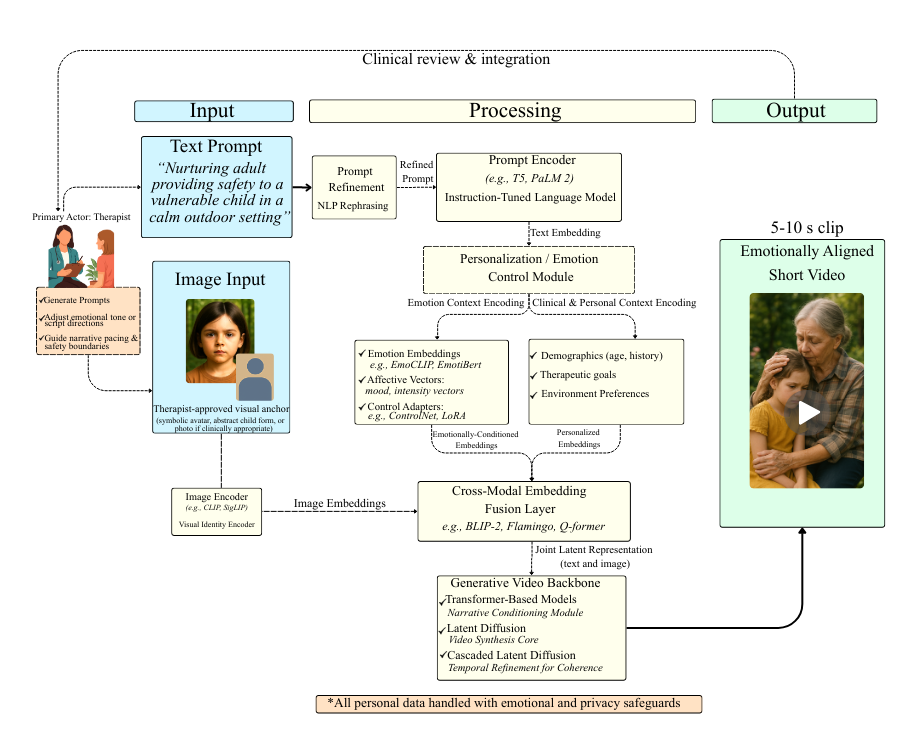
Workflow / Interaction Model
This workflow positions the therapist, not the client, as the primary actor who guides, configures, and validates generative outputs used in therapeutic sessions. The system functions as an assistive tool that transforms therapist-defined narrative intent into short visualizations, while preserving clinical oversight and emotional safety at every stage.
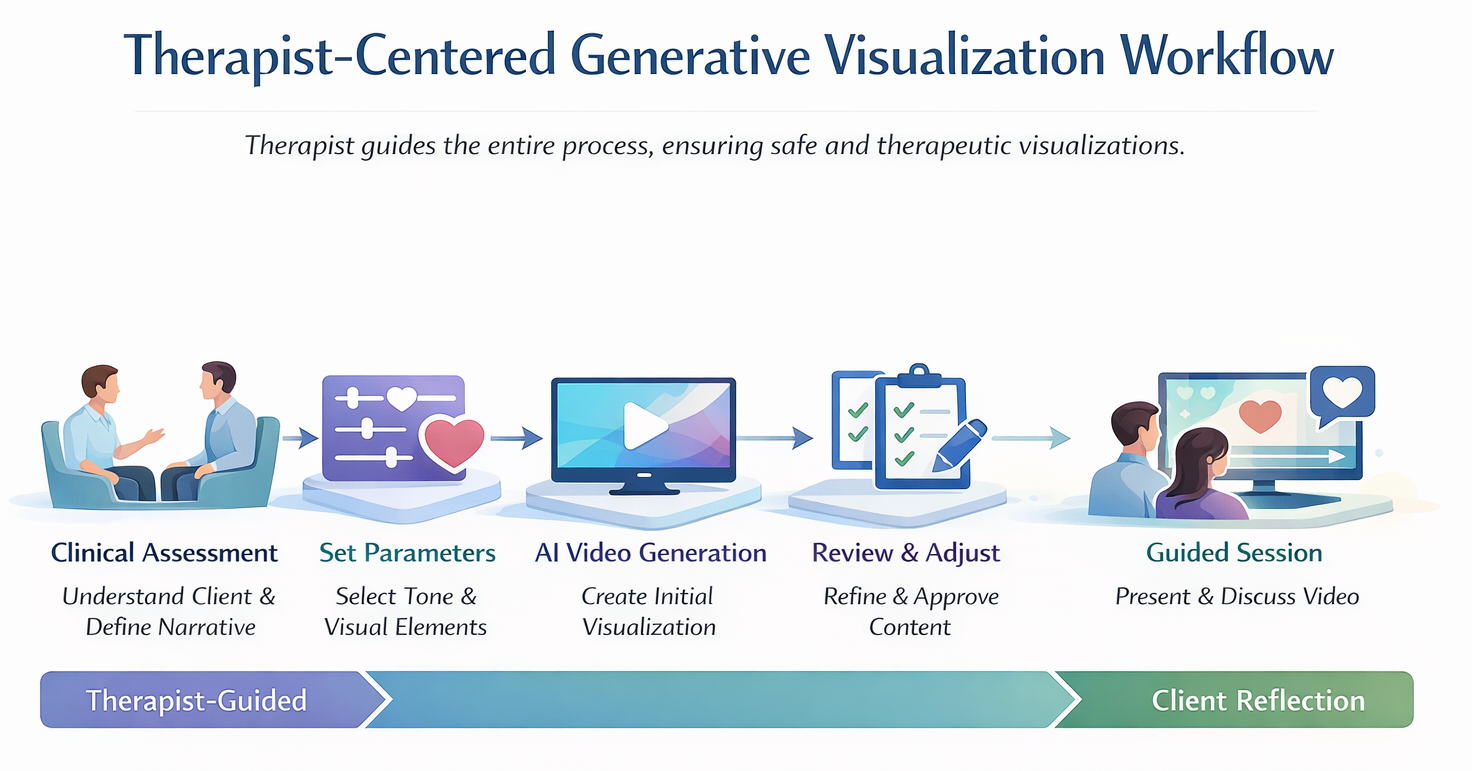
Clinical Understanding & Narrative Structuring
Therapist gathers emotional, developmental, and contextual information through dialogue and observation.
Specification of Visual & Emotional Parameters
Therapist configures key parameters, such as intended emotional tone (e.g., calm, validating), symbolic representation (e.g., avatar vs. abstract child), and pacing.
Generative Synthesis (System)
The system processes narrative + emotional + optional visual anchors to synthesize short video sequences.
Clinical Review & Refinement
Therapist reviews the generated content, adjusts tone, symbolism, or pacing, and requests revisions if needed.
Guided Therapeutic Use
Therapist introduces the visualization during a session, contextualizes it, and facilitates reflection and emotional engagement.
Why It Matters
Addressing the visualization gap in trauma-informed therapy through responsible AI orchestration.
Trauma therapies rely heavily on guided imagery for emotional processing. However, many clients face "imagery barriers" due to emotional numbing or limited imaginative capacity, making standard interventions inaccessible.
Current digital health tools are predominantly text-based and lack immersive components. Meanwhile, raw Generative AI lacks the clinical controls and emotional safety guardrails required for therapy.
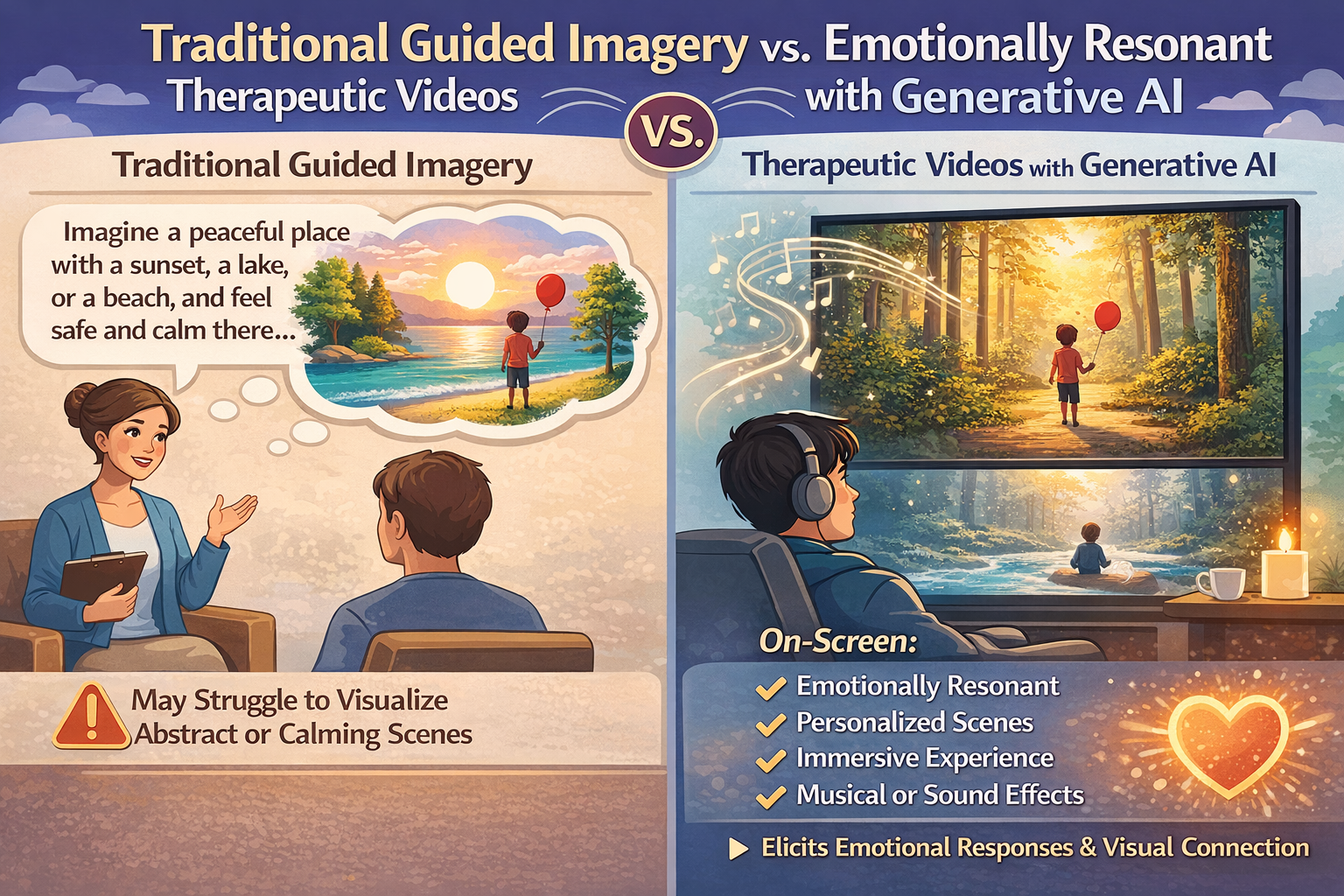
Conceptual Model: Therapist-mediated visualization reduces client cognitive burden while maintaining emotional safety.
By positioning AI as a therapist-directed support tool rather than a replacement, we can enable controlled, session-bound visualization that lowers the cognitive bar for vulnerable clients.
This approach drives higher engagement in experiential therapies and sets a standard for responsible, human-in-the-loop AI in high-stakes mental health contexts.
Reflections
Evolving from an AI-first assumption to a therapist-centered reality.
What Changed
I initially assumed a client-driven prompting model. Through research, I pivoted to a therapist-centered workflow to ensure clinical safety. This led to a total rethink of agency, control, and emotional pacing within the interface.
- Emotional tone controls for therapists.
- Variable symbolism (Literal vs. Abstract).
- Mandatory review/approval loops.
Core takeaway: Clients should never "self-visualize" using raw, unfiltered AI prompts.
Generative models currently lack emotion regulation and therapeutic personalization. This project sparked critical questions regarding the development of emotion models and safe content filtering in high-stakes mental health contexts.
The next phase involves prototyping the Control UI for emotion and pacing, followed by usability testing with clinicians to evaluate its impact on the therapeutic alliance.